

Drawn to the Edge
War and Peace by the Salish Sea

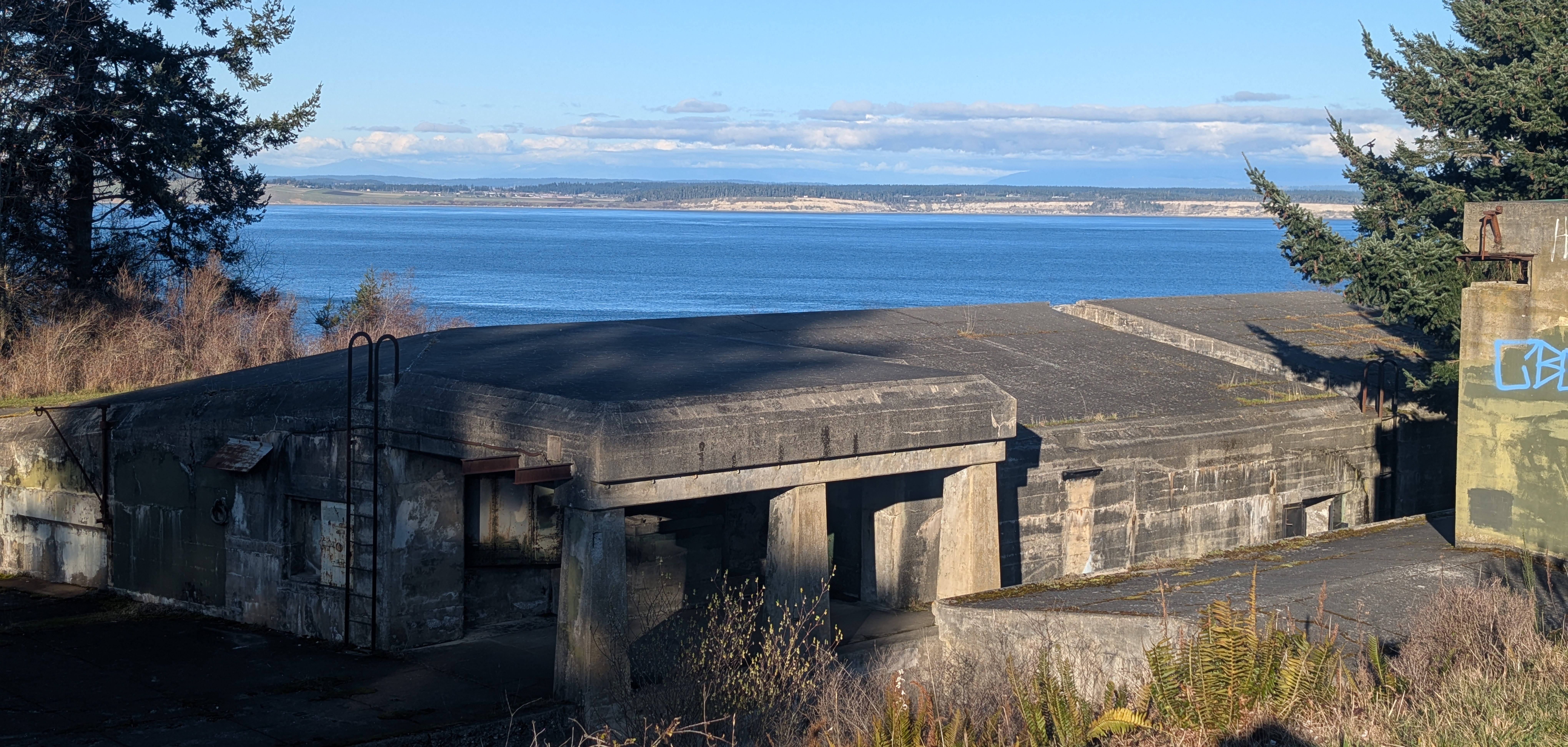
Last week I returned from a three-week residency at Centrum, Fort Worden, Port Townsend, Washington, at the edge of the Salish Sea. It was a solitary residency. I spent many hours, days and miles wandering around on my own through the overgrown historical military site, dating back to the 19th century, feeling as if I were traversing the edge of the earth.
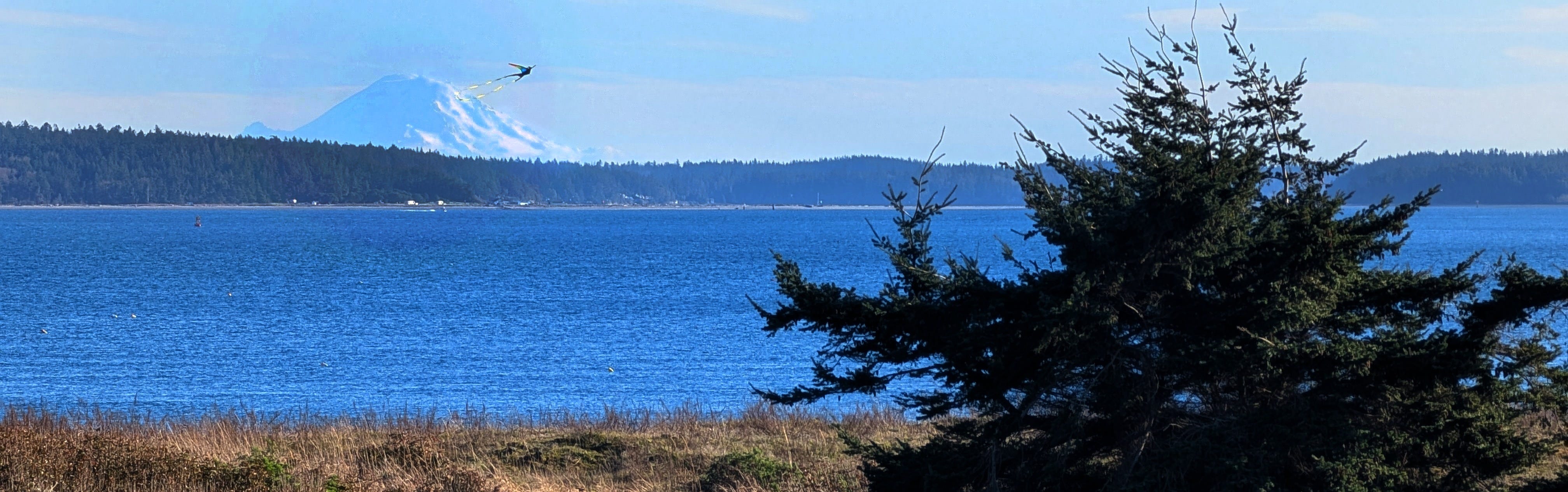
Under an overcast sky, giant trees, century old concrete bunkers and the sea appear and disappear, shifting with the mist. But when the sun burns through, the shadows turn almost black, and the light blinding. On a sunny afternoon, the majestic and still active stratovolcano Mt. Baker (also known as Kulshan, derived from one of the names given to it by Salishan peoples) looms over the Cascade Mountains on the eastern horizon.
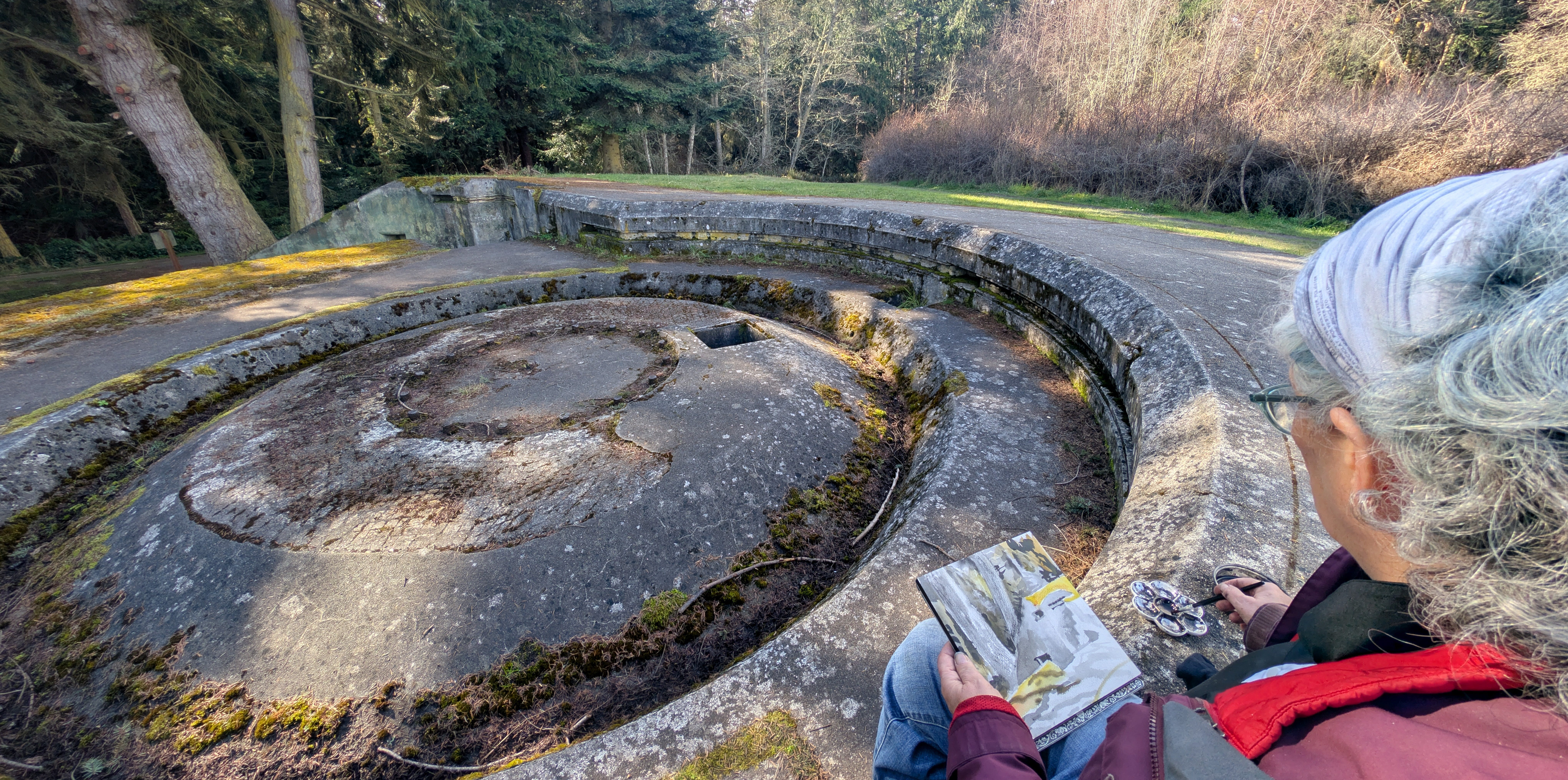
In rain or sun, plump, black tailed deer, seemingly as indifferent to human presence as the weather, placidly graze grass which has grown over massive concrete bunkers, built starting in 1902. They were built not against storms or tsunamis, but against the possibility of attack from other human beings.
I walked for miles, drawn by curiosity, driven to explore with no pressure to narrate, occasionally stopping to draw until my fingers were numb with cold. I paid attention to the specific qualities of the spaces in which I wandered, noticing and trying to capture what drew my eye, not really knowing why. Wrapped in solitude, I kept company with the trees and moss. The trails felt magical and mysterious, the bunkers haunted by those who built them over a hundred years ago, with only traces left where enormous cannons and tanks once rested.
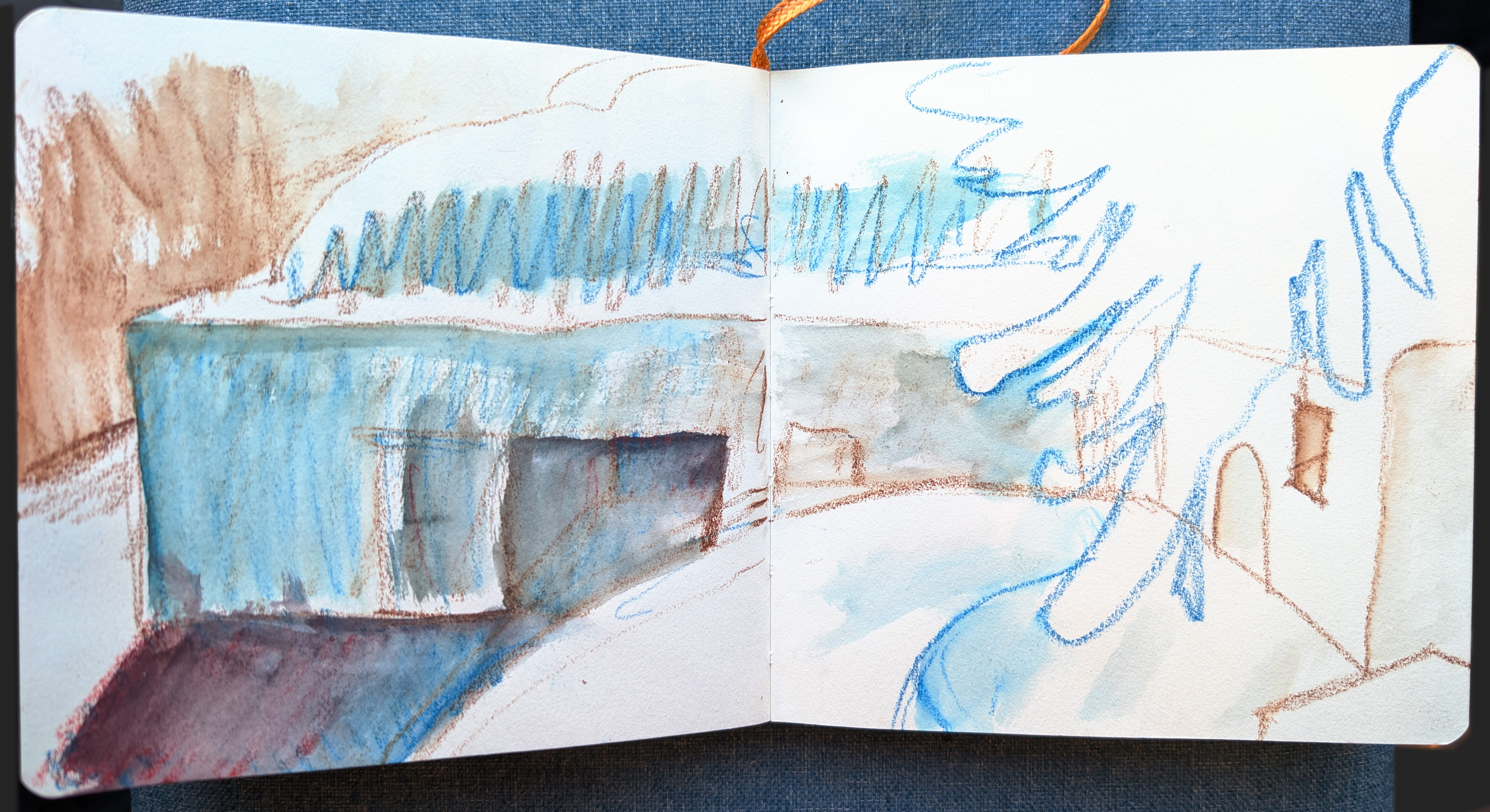
The imagined invasion from the Salish Sea at Fort Worden, which motivated the construction of these bunkers, never took place. Perhaps they served as a deterrent. One might say that all that engineering, the labor, the extraction from the earth were wasted. We are capable of such extraordinary achievements and so much of it is aimed at either destroying or defending ourselves from other humans.
The architecture of the bunkers, with their thick walls and trapezoidal supports, reminded me of the Incan ruins in the Sacred Valley of Peru, which my husband Scott and I explored a couple of years ago. I thought about the tremendous attention, resources and brilliance we humans pour into potential and actual lethal conflicts with other humans. The Incan fortresses, as majestic and massive as they still are, did not protect the people who built them from the Spanish conquistadores.
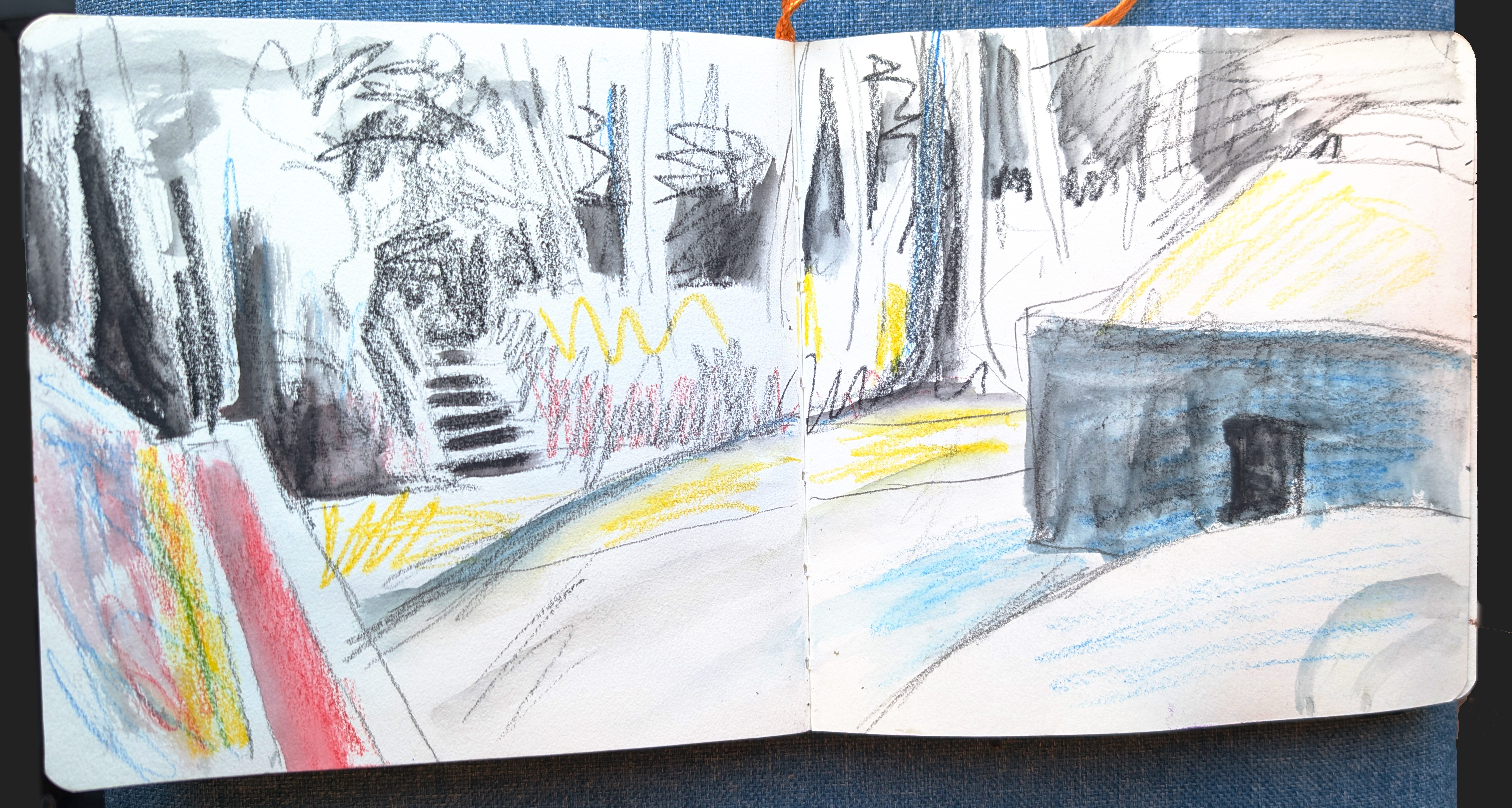
Drawing feels like an almost ridiculously humble activity in comparison. It’s not about avoiding or causing death, but rather for me simply becoming as alive as possible to the places and times in which I find myself. Sitting on top of a bunker, I felt a different kind of urgency as I pulled out my sketchbook, pencils and paints. Every moment felt as precious and fleeting and full of some kind of meaning I couldn’t put words to. Drawing encourages me to stay with what's actually there, to let something emerge without forcing it into explanation.
The last few days of the residency Scott joined me. His best friend from high school, Joey, lives with his family in the adjacent town of Port Townsend, and they were so happy to spend time together, to talk endlessly about their shared passions of comedy and magic, and life’s vicissitudes. Joey’s daughter, Phina, shared some new ideas for her one-woman show (with tuba and puppets), made us pizza, and life was good, the way an ordinary life can be.
The morning we left Washington state, we woke to the news that the US and Israel had started a hot war with Iran. March 1, 2026. I had spent three weeks practicing one kind of human attention. We woke up to news of another. It was shocking but not surprising. A dead weight descended into the pit of my stomach.
Scott and I were both in Manhattan on September 11, 2001. He came out of the subway that morning in time to see the towers disappear in a cloud of smoke and ash. We smelled what we imagined was the stench of death for weeks afterward. An ordinary day and a beautiful blue sky can be transformed so quickly in such unexpected and horrifying ways.
On Sunday, March 1st we drove to the airport in relative silence. It was still early morning. The consequences of the enormous events that took place while we slept are still to unfold.
Thanks so much Judith. Sometimes I agree and sometimes I feel all I can do is taste the strawberry before getting eaten by the tiger.
Hi Andrea... thanks so much for this 💗! So sorry about the war. My feelings are that what we are doing as Artists is critically important. Keeping our powerful consciousness focused on the creative process is not only healing for us, it feeds this healing to the collective consciousness that desperately needs healing. After following the scientific proof of this from HeartMath, I am struck by the understanding that Artists have an unique and important role to play. I particularly love this part of your post:
" I walked for miles, drawn by curiosity, driven to explore with no pressure to narrate, occasionally stopping to draw until my fingers were numb with cold. I paid attention to the specific qualities of the spaces in which I wandered, noticing and trying to capture what drew my eye, not really knowing why. Wrapped in solitude, I kept company with the trees and moss. The trails felt magical and mysterious..."
Thank you so much... peaceful happiness Judith ❤️